A garage door for people changes the way the whole space works, not only the way it looks from the yard. A side entry door gives you faster access to tools, bikes, trash bins, lawn gear, and stored items without raising the big overhead door each time. That matters in a U.S. home where the garage may act as mudroom, workshop, storage room, and weekend project zone all at once. The goal is simple: choose the right door, place it where it helps daily movement, frame it cleanly, seal it against weather, and make it hard to force open. A practical home improvement resource like trusted renovation planning guidance can help you think beyond the purchase and plan the full job. This guide walks through door choice, wall layout, flashing, locks, lighting, air sealing, and upkeep so the finished opening feels natural from the first week. The best result is not the fanciest slab. It is the one you use without thinking, lock without fuss, and trust during bad weather.
Planning a Side Entry Door Before the First Cut
A new walk-through opening starts as a convenience project, but it becomes a wall project the minute you mark the studs. That is where many homeowners go wrong. They shop for a door first, then discover the electrical run, masonry pier, water heater vent, or shelving wall already claimed the best spot.
The better order is slower at the start and cheaper at the end. Study the garage from both sides, then choose the opening.
Check the wall, traffic path, and local rules first
Stand inside the garage with the lights off during daytime. The dark corners tell you where this door will help most. A garage service door near the driveway may save steps when you bring in groceries. One near the backyard may make more sense if you store a mower, snowblower, pool tools, or sports gear there.
Now look for friction. Will the open door hit a parked SUV? Will it block a freezer drawer? Will a trash can live in front of it by accident? A door that lands behind clutter becomes a wall decoration. People keep using the overhead door because the new route feels annoying.
Code comes next. Many U.S. cities allow a basic exterior garage door swap with little trouble, but cutting a new opening can trigger permit rules. A detached garage, attached garage, fire separation wall, townhouse wall, or wall close to a property line can change the answer. The door between a garage and the house has stricter fire-separation rules than an exterior garage door that opens to the yard. Do not treat those two openings as the same job.
Here is the non-obvious part: the cheapest layout may be the one that avoids moving utilities, not the one with the shortest walk. In a Phoenix garage with stucco outside and a panel box inside, shifting the door six feet away from the “perfect” spot can save repair work, inspection stress, and a messy patch beside the new frame.
Pick a door made for garage weather and rough use
A garage is harder on a door than a hallway. It gets humidity swings, lawn dust, car exhaust, winter slush, paint fumes, and the occasional shoulder bump from someone carrying a ladder. That is why a light interior slab belongs nowhere near this opening.
For most homes, steel or fiberglass makes the most sense. Steel is strong and budget-friendly, but it can dent. Fiberglass handles coastal air and damp climates better, though it often costs more. A solid wood unit can look warm on an older house, but it asks for steady painting and more patience around moisture.
Pay close attention to the frame. Many failures blamed on the door begin with a weak jamb, plain indoor casing, or a threshold that never had a chance against wind-driven rain. Buy a prehung exterior unit when possible. You get a matched slab, jamb, sweep, threshold, and weatherstripping instead of a pile of parts that may fight each other.
A small glass lite can make the garage feel less cave-like. Still, glass changes the security picture. Choose tempered glass, keep the lite away from the lockset when you can, and think hard before placing clear glass on an alley-facing wall. Privacy glass often gives the best mix: daylight without giving strangers a clean inventory of your tools.
Framing, Flashing, and Weatherproofing the Opening
After planning, the project turns physical. This stage decides whether the door feels square, closes with one finger, and stays dry during the first hard storm. The work may look like carpentry, but it is also water management.
Water does not need a dramatic gap to cause trouble. It needs a lazy sill, a missed flashing lap, or a bead of caulk asked to do a job that should have belonged to metal, tape, or slope.
Cut and frame the opening with the structure in mind
Start by confirming whether the wall carries roof load. Many garage side walls do. That does not mean the project cannot happen. It means the header must match the span, roof load, wall construction, and local code. Guessing here is a bad trade.
A wood-framed garage usually needs careful stud layout, temporary support when required, a proper header, jack studs, king studs, and a rough opening sized to the door maker’s instructions. Do not size the hole from the slab alone. Measure the unit, check the rough opening callout, and leave room for shimming.
Masonry changes the job. A concrete block garage may need saw cutting, a steel lintel, dust control, and patching that matches the existing wall. This is often where a handy homeowner should pause and hire help for the opening, then finish the door and trim afterward. The door is simple. The wall is not.
A clean sequence helps:
- Mark the rough opening from both inside and outside.
- Locate wires, pipes, vents, anchors, and framing.
- Build or install the header and side supports.
- Cut the sheathing or masonry without overcutting corners.
- Dry-fit the prehung unit before adding sealant.
- Shim behind hinges and strike areas, not random hollow spots.
- Fasten through strong jamb points and recheck the reveal.
A small reveal tells the truth. If the gap around the slab looks uneven before trim, it will still bother you after paint.
Seal the sill, sides, and top like water will test them
The threshold is the first leak risk. In snowy parts of Ohio, Michigan, or upstate New York, a garage slab can collect meltwater near the wall. In parts of Texas or Florida, wind can push rain sideways. Either way, the bottom of the opening needs more respect than a quick caulk line.
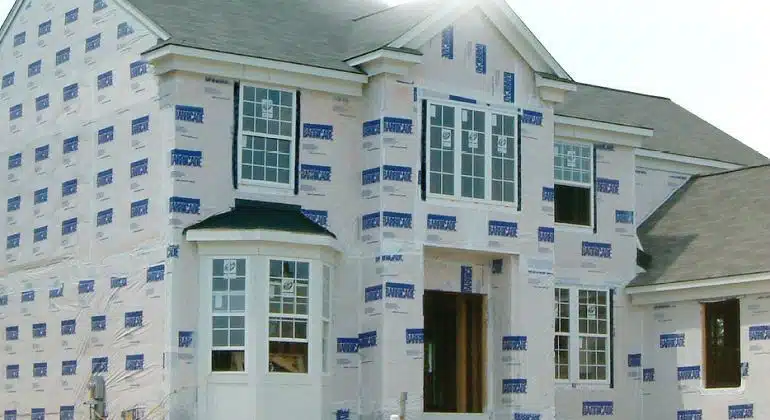
A sill pan or sloped sill detail gives water a way out. Flashing tape should lap in the right order: bottom first, sides next, top last. House wrap or building paper should shed water over the flashing, not behind it. This “shingle style” idea sounds old-fashioned, but it still beats thick caulk used as a dam.
Use low-expansion foam around the jamb, not the aggressive kind that bows frames. Keep shims tight at the hinge screws and strike plate. Replace at least one short hinge screw with a longer screw that reaches solid framing. That one detail improves strength and keeps the door from sagging after months of use.
Finish the exterior with trim that suits the siding. Vinyl siding needs J-channel or a proper trim pocket. Fiber cement needs correct clearances and painted cuts. Brickmold must meet siding in a way that drains. For more project planning around wall openings, add exterior door weatherproofing guide to your internal notes before you publish.
The counterintuitive truth is that paint is part of the water plan. Bare top and bottom edges drink moisture. Prime and paint them before the door becomes part of your daily routine, especially if the garage is unconditioned.
Security Choices That Still Work on a Busy Morning
Security fails when it gets in the way of normal life. A homeowner may buy a heavy lock, then leave it unlocked because the key sticks, the latch misses, or the porch light never comes on. The best garage door security setup feels boring. That is the compliment.
Think of the new opening as both a convenience point and a possible weak spot. You want it easy for your family and irritating for everyone else.
Choose locks, hinges, and strike plates as a system
A good lock starts with a deadbolt, not a fancy knob. The deadbolt should throw smoothly into a reinforced strike plate held by long screws. The knob or lever handles daily latching, while the deadbolt handles resistance. Asking a knob latch to protect a garage full of tools is wishful thinking.
Outswing doors have exposed hinges unless you use security hinges or non-removable pins. Inswing doors protect hinges better, but they can give wind-driven rain more chances at the threshold if the weather side is harsh. Neither swing wins everywhere. The best choice depends on grade, roof overhang, storm direction, and how tight the garage layout feels inside.
Door material matters too. A steel-skinned unit with a strong frame and reinforced strike often beats a heavier-looking unit hung in a weak jamb. Burglars do not admire the slab. They attack the edge, the glass, the latch, and the dark corner around it.
One real example: a suburban Atlanta homeowner may place a garage service door beside the side yard gate. That location is handy for lawn tools, but it also sits away from the street. A deadbolt alone is not enough there. Add a reinforced strike, good lighting, a locked gate, and trimmed shrubs. Security comes from layers, not one heroic part.
Add lighting and visibility without making the door ugly
A dark door invites testing. A lit door makes people feel seen. Motion lighting near the opening is one of the simplest garage door security upgrades because it changes the behavior around the door before anyone touches the lock.
Place the light where it covers the approach, not where the open door blocks it. Avoid glare that shines straight into a neighbor’s bedroom. If you use a camera, mount it high enough to see faces and packages, but not so high that it captures only hats and hoodies. Technology should support the door, not distract from bad hardware.
Visibility works both ways. A narrow path from the driveway can help you notice footprints in snow, moved bins, or a gate left open. In warmer areas, gravel beside the garage may look clean but feel unstable at night. A firm stepping pad or short concrete walk can make the route feel safer.
The non-obvious security move is convenience. A door that closes cleanly and has a keypad, smart lock, or well-placed key routine gets locked more often. A stubborn latch becomes a daily excuse. If the lock annoys you on Tuesday morning, it will not protect you on Friday night.
Comfort, Air Quality, and Daily Convenience After Installation
Once the door swings well, the project is not finished. A garage opening affects smell, sound, drafts, and how the space behaves in winter and summer. This is where a decent installation becomes a good one.
The garage is not living space, yet it touches living habits. You may pass through it every day. You may store chemicals there. You may have a bedroom above it. Small gaps can make that connection unpleasant.
Seal the opening against fumes, drafts, pests, and noise
Attached garages deserve care because air can move from the garage toward the house. The EPA warns that carbon monoxide cannot be seen or smelled, and generators or engines should never run inside a garage. That warning belongs in your thinking even when the new door opens outdoors.
Weatherstripping should touch evenly on all sides. The sweep should meet the threshold without dragging so hard that the door fails to latch. If daylight shows at the lower corners, add corner pads or adjust the sweep. Those tiny triangles can bring in cold air, ants, and garage odors.
Air sealing is not only about comfort. It also helps keep dust and fumes from creeping into rooms beside or above an attached garage. For a stronger content cluster, pair this article with attached garage air sealing checklist, especially if your readers plan bigger insulation or drywall work later.
There is one catch: a tighter garage can hold fumes longer if people run engines, store gasoline carelessly, or use fuel-burning tools indoors. Better sealing does not make unsafe habits safe. It makes the boundary cleaner when the garage is used the way it should be used.
Finish the details that decide whether you enjoy using it
The first week after installation tells you what the checklist missed. Does the door swing into a rake? Does rain splash mud onto the threshold? Do you need a hook for keys, a boot tray, a small shelf, or a brighter bulb? These details sound small because they are. They also decide whether the door earns its keep.
Add a landing if the step down feels awkward. Many local codes have rules for landings, step height, and egress paths, so check before pouring concrete or building a stoop. A safe landing matters more than a pretty trim color. Carrying groceries through a narrow, sloped step in the rain teaches that lesson fast.
Paint, caulk, and hardware need a simple care routine. Inspect the sweep each fall. Tighten hinge screws when the slab starts to rub. Touch up exposed edges. Clean the threshold so grit does not grind down the seal. A garage service door lives a rougher life than the front door because it sees work clothes, wet shoes, and armloads of stuff.
In a Minnesota home, the win may be fewer icy trips around the driveway. In a Southern California bungalow, it may be easier bike storage and a cleaner path to the side yard. The point is not luxury. It is a daily route that feels natural.
Conclusion
A garage walk-through opening looks like a modest upgrade, yet it changes security, movement, weather protection, and how often you fight the overhead door for small tasks. The smartest projects start with the wall, not the catalog. Find the clean path, respect the structure, check local rules, and choose hardware that people in the house will use every day.
A side entry door works best when the hidden parts get as much attention as the visible slab. That means a strong header, dry sill, even weatherstripping, reinforced strike plate, and lighting that covers the approach. Skip one of those pieces and the project may still look finished, but it will feel unfinished.
Do not chase the fanciest option. Chase the door that closes square, locks fast, sheds water, and fits your actual routine. If you plan it that way, this small garage change can make the whole house feel easier to live in.
Frequently Asked Questions
How much does a garage service door cost to install in the USA?
Typical installed pricing depends on wall type, door material, labor rates, and whether a new opening must be cut. A simple replacement may stay in a lower range, while masonry cutting, electrical relocation, or a new stoop can raise the cost fast.
Do I need a permit to add a new walk-through garage door?
Many cities require a permit when you cut a new exterior opening because the work affects structure, weather protection, and sometimes fire separation. A same-size replacement may face fewer rules. Call the local building office before buying the door.
What type of exterior garage door is best for most homes?
Steel and fiberglass usually make the most sense. Steel offers strength at a fair price, while fiberglass handles damp or coastal air better. Wood can look great on older homes, but it needs more upkeep and careful edge sealing.
Does a garage door to the yard need to be fire-rated?
An exterior door from the garage to the yard often follows different rules than the door between an attached garage and the living area. Fire-rating needs can change near property lines or special wall conditions, so local code decides the final answer.
Should a garage service door swing inward or outward?
Inswing doors protect hinges and often feel familiar, but they take up interior wall space. Outswing doors save interior space and can resist wind pressure well, yet they need security hinges. Grade, drainage, climate, and layout should guide the choice.
Can I install a new door in a concrete block garage?
Yes, but block walls need more planning than wood framing. The opening may require saw cutting, a steel lintel, dust control, and careful patching. Many homeowners hire a mason or contractor for the opening, then handle paint and trim themselves.
What is the best way to improve garage door security?
Start with a deadbolt, reinforced strike plate, long screws, solid framing, and bright exterior lighting. Add security hinges for outswing doors and avoid clear glass near the lock. A camera helps, but it cannot fix a weak latch area.
How long does installation usually take?
A same-size replacement may take part of a day for an experienced installer. Cutting a new opening can take longer, especially with masonry, siding repair, electrical work, or concrete steps. Weatherproofing and paint can stretch the project across more than one visit.