A living room bay can become the spot everyone fights over, or it can stay an awkward ledge where plants, mail, and stray pillows gather. The difference comes from planning the bay window seat as furniture, storage, and architecture at the same time. You are not adding a box under glass. You are shaping the way the room handles light, seating, clutter, and daily habits. For many U.S. homes, especially older colonials, Tudors, bungalows, and suburban houses with front-facing bays, this build solves a common problem: the room has charm, yet no useful place for blankets, games, pet gear, or off-season throws. A smart window seat cushion makes the nook inviting, while hidden storage keeps the living room from feeling like a drop zone. For broader home improvement project planning, the best projects are the ones that make space feel calmer without shouting for attention. That is the right standard here. Build it so guests admire the room first, then notice the work.
Planning a bay window seat That Looks Native to the Room
Most failed window benches go wrong before anyone picks up a saw. The mistake is treating the bay as a spare corner instead of a shaped part of the house. A living room bay usually has angled walls, old trim, uneven plaster, baseboard heat, floor vents, or window cranks that refuse to cooperate. The project works best when you read those details first, then build around them with a plan that feels calm, not forced.
Measure the Bay Like a Cabinetmaker, Not a Furniture Shopper
Start with the shape of the bay, not the cushion. Measure the back wall, the two angled sides, the front span, the window sill height, and the depth from glass to the point where the bench front should land. Then measure again at the floor and at seat height. Older homes in places like Boston, St. Louis, Philadelphia, and Cincinnati often have bays that look square from across the room but shift by half an inch from left to right.
That small drift matters. A premade bench may leave crooked shadow gaps, while a built-in storage bench can hide those quirks with scribed trim and filler strips. The non-obvious move is to avoid chasing perfect angles in the main box. Build a strong rectangular or segmented frame, then let the face trim and top panel handle the visual fit. The structure needs strength. The trim needs grace.
Seat height sets the mood. Around chair height usually feels natural once the cushion sits on top, but the right number depends on cushion thickness and window sill placement. If the sill is low, a thick cushion can crowd the glass. If the sill is high, a thin pad can make the bench feel like a waiting room ledge. Test the height with stacked books and a folded blanket before you build anything.
Depth has the same trap. A deep bench looks luxurious in photos, but it can feel strange in a living room where people sit upright to talk. Around 18 to 22 inches of usable seat depth suits most adults. A deeper bay can still work, but then you need back pillows, bolsters, or a cushion layout that invites lounging rather than stiff sitting.
Decide What the Storage Must Hold Before You Choose Doors
Storage should start with real objects. Blankets need broad space. Board games need flat shelves. Kids’ toys need fast access. Pet beds, holiday pillows, and router gear each demand a different layout. If you skip that step, you may build a beautiful lid that opens to one giant cave where everything gets buried by Thanksgiving.
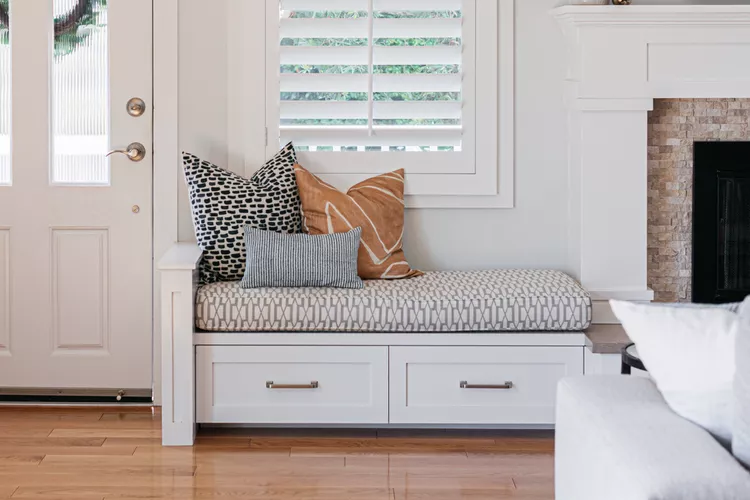
A lift-up top gives the cleanest face, and it works well for bulky items you do not grab every day. Drawers make better sense when the bench will hold small items, remotes, cords, books, or family games. Doors at the front can work in a formal room, but they need enough floor clearance so people are not fighting the rug or coffee table each time they open storage.
Here is the counterintuitive part: the largest storage opening is not always the best one. A huge hinged lid can become heavy after the window seat cushion goes on top. It also asks someone to move pillows each time they need a blanket. Two smaller lids, a center drawer, or a mix of lift-up and front access often performs better in daily life.
Think about vents and outlets early. Many American living rooms place HVAC registers under windows because glass loses and gains heat faster than insulated wall sections. If a register sits in the bay, do not bury it. Route airflow through a toe-kick grille or front vent panel, and keep the path clean inside the box. Heat trapped inside storage can warp materials and make cushions age faster.
Framing, Materials, and Access That Hold Up to Daily Use
Once the plan fits the room, the build has to survive feet, elbows, pets, kids, and the occasional adult who drops down harder than expected. This is where good-looking inspiration photos can mislead you. A living room storage feature does not fail because the paint color was wrong. It fails because the frame flexes, the lid slams, the cushion slides, or the front panel blocks something you need.
Build the Base for Weight, Airflow, and Old-House Surprises
A bench in a bay should behave more like built-in cabinetry than a loose trunk. Use a level base or platform, then frame vertical supports where people will sit most often. In many DIY builds, three-quarter-inch plywood handles the top well, but the framing below still matters. The top should not bounce when someone shifts their weight near the angled corners.
If the floor slopes, shim the base rather than letting the bench follow the dip. Your eye reads the window line and cushion line more than the floor. A level top makes the room feel settled. In a 1920s house with oak floors, for example, the floor might drop toward the exterior wall. You can hide that gap behind shoe molding at the bottom, while the cushion stays true to the glass.
Material choice depends on finish. Paint-grade plywood, poplar trim, and MDF panels can create a neat built-in look for less cost. Stain-grade wood asks for more skill because every joint shows. MDF paints smooth, but it hates water, so avoid it near leaky windows or damp masonry. Plywood handles stress better, especially on lids and panels that move.
Leave access where the house may need it later. If an outlet, cable line, radiator valve, or cleanout sits in the bay, create a removable panel. This feels fussy during construction, but it can save you from cutting open a finished bench two years later. Hidden access is one of those details nobody praises until the day it saves the project.
Choose Hinges, Drawers, and Lid Details With Real Hands in Mind
Hardware decides how the bench feels. A piano hinge spreads weight across a long lid and can give a cleaner lift. Soft-close hinges or lid stays help prevent slamming, which matters if children use the room. Finger pulls, small notches, or low-profile handles keep the front from snagging legs as people pass the bay.
For drawers, full-extension slides make the storage more useful because you can reach the back. Cheap slides often feel fine empty, then complain once loaded with board games. If the bench front follows an angled bay, standard drawers may need a straight center section rather than trying to open from angled faces. That choice can make the build cleaner and less fussy.
A built-in storage bench also needs a top that respects the cushion. If the lid opens upward, the cushion either has to move or flex with the lid. A split cushion can solve that, but too many seams can look busy. Another option is front drawers with a fixed top, which keeps the cushion parked. That is often the better answer for families who use the storage daily.
Do not forget cleaning. A bay catches dust, pet hair, leaf bits, and lost toys. A small reveal above the floor looks sharp, but a toe-kick or base trim that accepts a vacuum head makes life easier. The best built-ins have a quiet service logic. They look polished, then clean up without a fight.
Cushion, Fabric, and Comfort Choices That Make the Seat Worth Using
A bench without comfort becomes a display shelf. This is where many projects lose their promise. The frame may look crisp, the paint may match the trim, and the storage may hold plenty. Yet if the cushion is thin, slippery, or covered in the wrong fabric, nobody stays there longer than a minute. Comfort is not decoration here. It is the reason the build earns its footprint.
Size the Window Seat Cushion for People, Not Photos
A window seat cushion should match how people sit in your room. For reading, you may want a thicker foam with enough softness on top to settle in. For conversation seating, a firmer cushion helps people sit upright without sinking. For pets and kids, removable covers become more useful than fancy piping.
Foam density and thickness matter, but they do not need to become a science project. In most living rooms, a cushion around 3 to 4 inches thick feels substantial without swallowing the window trim. A thinner pad can work for a shallow bench, especially with back pillows. A thicker cushion can look plush, but it may raise the seated person too high and make the window locks awkward.
The non-obvious choice is to think about cushion sections before you think about fabric. One long cushion looks calm, but it can be hard to remove, clean, or lift for storage. Two or three pieces may work better in an angled bay. They also make it easier to open one storage lid without clearing the whole bench. The trade-off is visible seams, so align those seams with lid breaks or bay angles.
Add a way to keep the cushion from skating. Non-slip rug pad, small fabric ties, hook-and-loop strips, or a boxed cushion that fits snugly inside trim can all help. A cushion that slides forward every time someone sits will make the entire build feel cheap, even if the carpentry is strong.
Pick Fabric for Sun, Spills, and the Life You Have
Bay windows get light, and light changes fabric. A sunny living room in Phoenix, Denver, Dallas, or Atlanta can fade dark cotton faster than you expect. Performance fabrics, indoor-outdoor textiles, or tightly woven upholstery cloth can handle wear better than delicate linen. That does not mean the bench has to look like patio furniture. Many indoor-outdoor fabrics now pass for normal upholstery.
Color needs courage and restraint at the same time. A pale cushion can make the bay feel airy, but it may show paw prints and denim transfer. A darker cushion hides marks, yet it can pull heat from the sun and make the nook feel heavy. Pattern can be forgiving, especially small checks, tweeds, herringbone, or softened stripes.
Tie the fabric to the room through one element, not five. Match it to the sofa welt, the rug tone, the curtain edge, or a favorite throw. Do not match everything. A living room gains character when the built-in feels related to the room, not ordered from the same catalog page.
Window treatments deserve safety attention once seating sits under the glass. If young children visit or live in the home, choose cordless coverings or cords that stay out of reach. The U.S. Consumer Product Safety Commission warns that accessible window covering cords can pose a strangulation hazard for young children. This matters more once you create a climbable, inviting surface near the window. A good seat should never turn an old blind cord into a new risk.
Styling, Storage Habits, and Finishing Touches That Keep It Working
The build is not finished when the paint dries. A living room bench changes how the room behaves. People place coffee there. Kids climb it. Dogs claim it. Guests set bags on it. That is why the final layer needs rules, not in a harsh way, but in a practical one. The space should look easy because you made the choices before clutter arrived.
Make Living Room Storage Easy Enough to Use on a Tired Night
Living room storage only works when the easiest choice is the right choice. If blankets have to be folded into tight stacks behind a heavy lid, they will land on the sofa. If toys need sorting into five bins, they will stay on the rug. Give each category a home that matches how often it moves.
A good setup might place throws under one lift-up lid, family games in a center drawer, and pet supplies in a side cubby. In a small ranch home, that could remove two baskets from the floor and make the room feel wider. In a larger house, the same built-in can keep the formal room from becoming a storage room in disguise.
Use containers only where they help. A storage bin inside another storage box can become annoying. Soft-sided bags work for seasonal pillows. Low trays work for remotes or charging cords. Labels can help children, but in an adult living room, simple zones often look better than a label on every box.
The counterintuitive move is to leave a little empty space. Full storage feels efficient on day one and useless by month six. A bench that sits at 75 percent full has room for the blanket someone brings down during a cold snap, the puzzle bought over the weekend, or the guest pillow that needs a temporary home.
Finish the Built-In So It Belongs to the Architecture
Paint and trim decide whether the bench reads as part of the house. Matching the existing baseboards usually gives the most natural result. If your living room has white casing and stained floors, a painted bench with a wood top can bridge both finishes. If the room has dark trim, painting the bench to match the wall can keep the bay from feeling chopped into pieces.
Caulk small gaps where trim meets wall, but do not caulk panels that need to move. Use durable paint in a sheen that wipes clean. Satin or semi-gloss often works for trim-style surfaces, while the wall behind the cushion can stay in the room’s regular finish. Let the bench have enough sheen to handle hands and shoes.
The front face should not fight the rest of the room. Shaker panels suit many American homes because they echo cabinet doors without looking trendy. Flat slab fronts feel cleaner in a modern condo. Beadboard can charm a cottage, but it may look busy in a room that already has patterned curtains and a strong rug.
Add two links in your project plan before you call it done: built-in living room storage ideas and custom cushion measuring guide. Those internal references help you connect this project with related home content later, and they also remind readers that a great result comes from small decisions made in the right order.
Conclusion
A living room bay is too valuable to treat like leftover space. When you measure the angles, respect airflow, plan real storage, and choose fabric for daily use, the whole room starts to feel more settled. The work is not about making a cute nook for photos. It is about giving the house a place where light, seating, and storage meet without clutter. A well-built bay window seat can make an older home feel cared for and a newer home feel less plain. The cushion invites people in, but the hidden compartments do the quiet work after everyone leaves. That mix is why the project holds its value beyond looks. Build it with access panels, sensible lids, wipeable finishes, and enough empty space for life to change. Then let the bay do what it was always trying to do: pull people toward the best light in the room.
Frequently Asked Questions
How deep should a living room window bench be?
Most living room benches feel comfortable at 18 to 22 inches deep. Go deeper only if you plan to use back pillows or lounge-style seating. Shallow benches work for short visits, but they rarely become a favorite reading spot.
What is the best cushion thickness for a window nook?
A 3- to 4-inch cushion suits most window nooks. It gives enough comfort without raising the seat too high. If the sill is low, use thinner foam and add pillows. If the bench is deep, firmer foam helps support longer sitting.
Should a window bench have drawers or a lift-up lid?
Drawers work best for items you grab often, such as games, chargers, and books. Lift-up lids work better for bulky blankets and seasonal pillows. Many homes benefit from a mix, especially when the cushion would be annoying to move.
Can I build storage seating over a floor vent?
Yes, but the airflow needs a clear path. Route the vent through the toe-kick or front face with a grille, and keep the inside channel open. Covering a register can hurt comfort, strain HVAC performance, and trap heat inside the bench.
What fabric works best for a sunny window cushion?
Performance upholstery fabric or indoor-outdoor fabric usually handles sun, spills, and pets better than delicate natural fibers. Look for a tight weave and removable cover. Medium tones or small patterns hide daily marks better than flat white or deep black.
Is a built-in bench worth it in a small living room?
Yes, when it replaces loose furniture or floor baskets. The gain comes from combining seating and storage in one footprint. It also helps the room feel less crowded because the storage sits against the architecture instead of floating around the floor.
How do I stop a cushion from sliding forward?
Use non-slip rug pad, hook-and-loop strips, fabric ties, or a small trim lip at the bench edge. The best fix depends on whether the cushion needs removal for storage access. A snug boxed cushion also helps when the bay has angled sides.
Do I need a contractor for this project?
A careful DIYer can handle a simple bench, but hire help when the bay has electrical lines, HVAC rerouting, radiator parts, or damaged windows. Custom angles also demand patience. Paying for skilled carpentry can be cheaper than fixing a crooked built-in later.