A sunroom leak has a way of making the whole space feel borrowed, not owned. The problem may start as one drip on a wicker chair, but roof panel replacement becomes the smarter call when the glass unit has failed, cracked, fogged between panes, or lost its seal against the frame. A bead of caulk can buy a dry weekend. It cannot restore a tired glazing system, stop hidden wood rot, or make unsafe glass safe again. Most U.S. homeowners want the same answer: can this be sealed, or does the unit need to come out? A good inspection separates sunroom roof leak repair from a full swap by checking the glass, gasket, cap, flashing, slope, and frame. Before you approve any work, compare the symptoms with a home repair planning guide and keep photos from inside and outside the room. Those details help you talk clearly with a glazing contractor instead of paying for a guess.
Why Sunroom Roof Leaks Start Around Glass Units
A glass sunroom roof looks simple from the yard. Lines of panels, slim caps, and plenty of daylight. Up close, it works more like a small weather system. Water lands on the glass, runs toward caps, meets old gaskets, then looks for the easiest path inside. The leak you see above the sofa may have started three panels uphill.
Failed Seals Are Often the First Warning
Many leaks begin at the soft parts, not the glass itself. Rubber gaskets flatten after years of sun. Sealant pulls away from metal. Fasteners loosen by a fraction. None of that feels dramatic, but water does not need a dramatic opening.
In a cold Ohio winter, for example, a small gap along the cap can freeze at night and thaw by noon. That tiny movement repeats until the opening grows. By spring, a homeowner may blame the newest rainstorm, even though the roof started failing months earlier.
Here is the non-obvious part: a leak that appears after heavy rain is not always a water-volume problem. Sometimes light rain with wind exposes it faster because wind pushes water sideways under a cap. That is why a hose test from the wrong angle can miss the real entry point.
Cracked, Fogged, or Shifted Glass Tells a Different Story
Broken sunroom glass needs a different level of caution. A crack across a roof unit is not the same as a crack in a picture window. Gravity works against you. Hail, snow, branches, and heat stress can make a damaged unit less predictable over time.
Fog between panes points to a failed insulated glass seal. It may not leak into the room on day one, but the unit has lost part of its thermal value. In humid states like Florida, Georgia, and the Carolinas, fogging can also hide early corrosion or stained spacer bars.
A shifted unit can fool you. The glass may look intact, but one corner sits lower than it should. That creates a shallow pocket where water pauses instead of draining. Water that sits always wins. It stains, lifts sealant, and pushes dirt into joints until the roof starts acting older than it is.
When Roof Panel Replacement Is the Safe Fix, Not a Patch
Some sunroom problems deserve repair. Others deserve removal and reset. The mistake is treating every drip like a caulk job. Sealant is cheap, fast, and tempting, but it has to land on a sound surface. When the unit, frame, or drainage path has failed, a surface patch only hides the next bill.
When Resealing Makes Sense
Resealing can work when the glass is sound, the frame is square, and the leak comes from a small gasket or cap issue. A contractor may remove old sealant, clean the channel, tighten the cap system, and apply the right exterior-grade product. That can be a fair fix on a newer room with one weak joint.
A good test is pattern. If the leak appears only at one cap after wind-driven rain, resealing may solve it. If water shows up in several places, or if the same area has been sealed more than once, the roof is telling a bigger story.
This is where a sunroom roof leak repair checklist helps. Write down when the leak appears, where the water lands, whether the glass is fogged, and whether the ceiling trim has soft spots. Contractors make better calls when the clues are specific.
When Removal Protects the Room
Replacement glass panels make sense when the insulated glass unit has failed, the pane has cracked, or the frame pocket holds water. They also make sense when old repairs have layered sealant over dirt, paint, or dried gasket material. New sealant over bad buildup is a bandage on dust.
One common U.S. example is an older aluminum sunroom added in the 1990s. The original installer may be gone. The panel sizes may not match modern stock. A careful glazier has to measure thickness, tint, spacer type, edge clearance, and cap style before ordering anything.
The counterintuitive truth: replacing one unit can be cheaper than chasing a leak across half the roof. A homeowner may resist the larger upfront cost, but repeat service calls add up. Worse, every failed patch gives water more time to reach trim, flooring, and framing.
Choosing Glass, Gaskets, and Flashing That Survive Weather
The new panel is only part of the job. The roof succeeds or fails as a system. Glass, gaskets, caps, fasteners, flashing, slope, and drainage all have to agree with each other. A beautiful pane in a tired opening can still leak.
Match the Glass to the Roof, Not the Catalog
Sunroom roof glass should match the structure, climate, and code needs of the house. Many U.S. jurisdictions base local rules on model codes for skylights and sloped glazing, so your installer should confirm what your city or county requires through local sloped-glazing rules. Do not assume vertical window glass belongs overhead.
Safety glazing matters because overhead glass faces different stress. Snow sits on it in Michigan. Hail can strike it in Texas. Wet leaves can pile against it in New England. Even the best-looking unit needs the right rating for its job.
Energy performance matters too. In Arizona or Southern California, a clear roof may turn the room into a heat box by midafternoon. In Minnesota, a poor insulated unit can make the room feel cold long before winter reaches its worst stretch. A guide on choosing energy-efficient window glass can help you ask sharper questions before ordering.
Details Around the Panel Carry the Real Burden
Gaskets do boring work, which is why homeowners overlook them. They compress, cushion the glass, and block water from sneaking into the pocket. When a contractor replaces broken sunroom glass but reuses tired gaskets, the job may look finished while the weak point stays in place.
Flashing deserves the same respect. Where the sunroom meets the house wall, water changes speed and direction. Bad flashing at that joint can mimic a failed panel. A stain below the top row of glass may come from the wall connection, not the unit below it.
A practical example: a Pennsylvania homeowner sees water dripping from the second panel after storms. The glass company removes the cap and finds the panel intact. The real issue sits higher, where old siding trim dumps water behind the roof receiver. The fix is flashing work, not glass. That kind of finding saves money because it replaces the cause, not the symptom.
What the Repair Day Should Look Like at Your House
A clean replacement job has a rhythm. The crew protects the room, removes caps without bending them, lifts the old unit safely, cleans the pocket, checks drainage, sets the new glass, and tests the water path. When that order gets rushed, the sunroom may look fine until the next storm.
Preparation Reduces Damage Inside the Room
Clear the furniture before the crew arrives. Move plants, lamps, rugs, and cushions away from the leak zone. Glass work above a finished room needs space. Even careful removal can shake loose old dirt, dried sealant, or small chips from past damage.
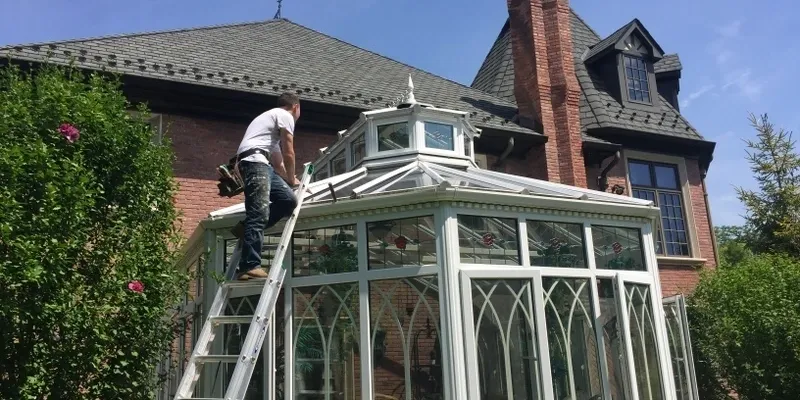
Ask how the contractor plans to access the roof. A low porch sunroom may need ladders and roof planks. A taller two-story connection may need staging. The safer plan may cost more, but it protects the glass, the workers, and your siding.
You should also ask what happens if hidden damage appears. Rotten wood, corroded screws, or warped caps can change the scope. A solid contractor will explain those risks before opening the roof. That conversation feels slower at first, but it prevents a surprise halfway through the day.
The Best Finish Is Quiet
The finished job should not announce itself. Caps should sit straight. Sealant should look neat, not smeared. Water should drain without ponding at the new unit. Inside, the trim should dry out after the next rain instead of showing a wider stain.
Do not judge the work only by the first dry afternoon. Watch the room through two or three storms. Check the floor, the wall line, and the underside of the panel after wind-driven rain. A small towel test near the old drip spot can tell you whether the fix held.
There is one smart habit many homeowners skip: save the glass order details. Keep the unit size, thickness, tint, coating, spacer color, and contractor invoice. If another panel fails years later, that paperwork can shorten the measuring process and reduce the risk of a mismatch.
Conclusion
A sunroom should feel bright, dry, and calm, not like a room you monitor every time clouds roll in. The right repair starts with knowing whether the leak comes from glass failure, gasket wear, flashing trouble, or a drainage problem. Guesswork is expensive in a room made of joints. When the unit has cracked, fogged, shifted, or lost its seal, roof panel replacement gives the space a cleaner future than another tube of caulk. That does not mean every drip needs a new pane. It means the diagnosis should respect the whole roof, not the stain on the floor. Choose a contractor who measures carefully, talks about safety glazing, checks the frame, and explains what will happen if hidden damage appears. A sunroom roof is exposed from above and lived under from below, so the margin for sloppy work is thin. Fix the cause, keep the paperwork, and let the room go back to doing its real job: bringing light into the house without bringing the weather with it.
Frequently Asked Questions
How much does it cost to replace a sunroom glass roof panel?
Cost depends on panel size, glass type, access, tint, coating, and frame condition. A small standard unit may cost far less than a custom insulated panel on a tall or steep sunroom. Labor rises when caps, flashing, or hidden damage need extra work.
Can a leaking sunroom roof panel be resealed instead of replaced?
Yes, if the glass is sound and the leak comes from a small gasket, cap, or sealant failure. Resealing is not a good fix for cracked glass, fogged insulated units, warped frames, or repeated leaks that return after past repairs.
Who should replace glass panels in a sunroom roof?
A glazing contractor or sunroom specialist is usually the better choice. Standard roofers may not handle overhead glass systems often. Ask about sloped glazing experience, safety glass, custom insulated units, water testing, and how they protect the room during removal.
Is broken sunroom glass dangerous if it is still holding?
Yes, it can be. Overhead cracked glass faces gravity, weather, heat movement, and possible impact from debris. Keep people away from the area below it and have a qualified contractor inspect it before the next storm or freeze cycle.
Why is my sunroom glass foggy between the panes?
Fog between panes usually means the insulated glass seal has failed. Moisture has entered the space between the panes, and cleaning the surface will not remove it. The unit may still block rain for a while, but its insulation value has dropped.
What type of glass is best for a sunroom roof?
The right glass depends on local code, roof slope, climate, panel size, and the existing frame system. Many overhead applications need safety glazing. In hot regions, coatings that reduce heat gain can make the room more comfortable during long summer afternoons.
Will replacing one glass roof panel make the others look different?
It can, especially if the original roof has aged, faded, or used a tint that is no longer made. A skilled contractor will match thickness, color, coating, spacer style, and reflectivity as closely as possible before ordering the new unit.
How long does sunroom glass roof work usually take?
A single panel may be completed in one visit after the custom glass arrives. Larger jobs, difficult access, damaged caps, or frame repairs can take longer. Measuring and ordering often take more time than the actual installation day.