
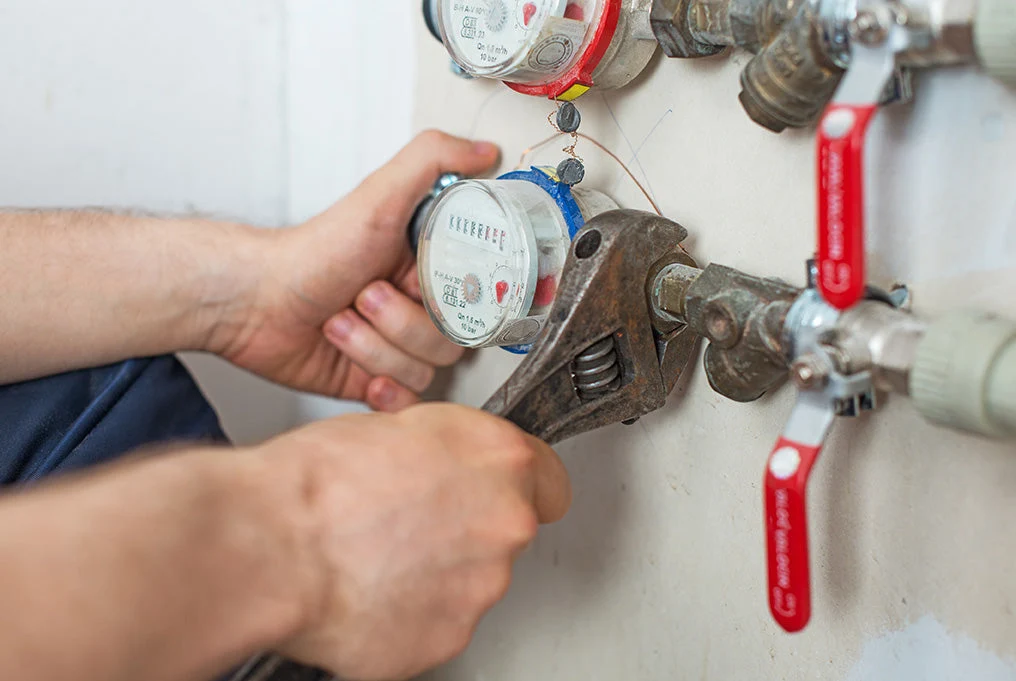
Water meter installation looks straightforward until the first phone call to the utility reveals a list of requirements nobody mentioned. Choosing the wrong water meter installation service (one that skips the permit, sources the wrong meter, or misses a backflow requirement) can mean failed inspections, costly rework, and delays in getting water service activated. Before hiring anyone, contact the local water utility to confirm the approved meter size, connection method, permit requirements, and inspection process. Then choose a licensed contractor who knows how to work within those rules from the start.
1. Confirm the Utility’s Requirements First
Every water utility has its own standards for meter type, size, location, fittings, and connection methods. Before contacting a contractor, call the utility and confirm the type of work required (new connection, replacement, relocation, or size upgrade) and who supplies the meter. Approved brands, fittings, pits, boxes, and yokes vary by utility, and work in the public right of way may require additional permits or traffic control approval.
Two things are easy to overlook at this stage:
- Inspection, activation, and final sign-off requirements
- Who is responsible for each part of the service line: the utility or the property owner
Identifying the utility’s rules before getting quotes prevents a contractor from proceeding with equipment or methods the utility will reject at inspection.
2. Understand What Type of Installation You Need
The scope of the project depends heavily on what type of meter work is required. Each carries different costs, timelines, and approval steps.
New Water Service
New connections require a tap into the utility main or service point, trenching, service line installation, meter pit construction, shutoff valves, and inspections. Tap fees and connection charges often add significantly to the total cost.
Meter Replacement
Replacements may be needed because of age, inaccurate readings, damage, freezing, or a utility upgrade program. Less excavation is typically involved, but approved fittings and testing still apply.
Meter Relocation
Moving a meter requires new pipework, possible wall or slab openings, surface restoration, and utility approval before work begins.
Meter Upsizing or Downsizing
Size changes require utility and plumbing evaluation rather than simply selecting a larger meter. Irrigation systems, commercial demand, additional fixtures, and pressure requirements all factor into this assessment.
3. Make Sure the Meter Is Correctly Sized
Meter sizing affects billing accuracy, system performance, and utility approval. Oversizing inflates cost and can mask leaks. Undersizing restricts flow, raises pressure issues, and may fail inspection.
The correct size reflects:
- Expected peak flow and fixture unit demand
- Service line capacity and diameter
- Working pressure at the meter location
- Utility standards for the property type and use
Confirm the final meter size directly with the water utility before any purchase or installation. Relying on a generic online sizing chart for a permit-controlled connection creates avoidable problems.
4. Check Backflow Prevention Requirements
Backflow prevention protects the public water supply from contaminated water reversing into the distribution system. Commercial properties, irrigation systems, and large or multi-unit residences often require approved backflow assemblies as part of the meter installation.
What to Confirm Before Hiring
Before signing anything, check whether the installation requires a backflow preventer alongside the meter and what type of assembly the utility specifies. Position, accessibility, and drainage requirements all apply.
Two further points matter here:
- Whether the device needs annual testing, certification, or registration after installation
- Whether the contractor is qualified to install and test that specific assembly type
Meter installation and backflow compliance are distinct requirements. A contractor who handles one but overlooks the other leaves the project incomplete.
5. Verify the Contractor’s Credentials
Cutting corners on licensing or utility registration creates problems the property owner ultimately inherits from a poorly chosen water meter installation service. Confirm the plumber’s license, registration, and insurance, and check whether the business is approved to work on utility connections in that jurisdiction.
Two questions worth asking directly:
- What experience does the contractor have with this specific installation type: residential, commercial, irrigation, or multi-unit?
- Who handles permits, inspection scheduling, utility coordination, and testing?
Choosing solely on the lowest quote without verifying the approval process often leads to failed inspections and repeat costs.
6. Ask What the Service Includes
A written scope prevents disputes and unexpected charges. Before accepting any quote, confirm whether each of the following is included, excluded, or billed separately.
Full Scope Checklist
Before accepting any quote, confirm that site assessment, meter sizing, utility coordination, and shutoff scheduling are included. Excavation, trenching, and underground utility locating should appear explicitly in the quote rather than be assumed.
The following items are frequently omitted or billed separately:
- Meter box, pit, yoke, valves, fittings, and backflow equipment
- Inspection scheduling and final activation
- Soil, concrete, paving, or surface restoration
- Permit fees, tap fees, inspection costs, and utility charges
Requiring this breakdown in writing separates a qualified contractor from one relying on vague estimates.
7. Review the Installation Location
Where the meter is installed affects access, protection, and long-term maintenance. Utility standards typically govern location, but the contractor should also evaluate practical factors:
- If the meter must be inside, outside, below grade, or in a utility room
- Accessibility for meter reading, inspection, and future replacement
- Clearance from structures, landscaping, vehicles, and stored materials
- Protection from freezing, traffic impact, and flooding where required
- If the meter position must fall within the public right of way or near the property boundary
Meters installed in poor locations create problems that persist long after the contractor leaves.
8. Understand Permits and Inspections
Most water meter installations require at least one permit. Depending on the scope, plumbing, building, street opening, or excavation permits may all apply.
Steps to Confirm Before Work Starts
Before work begins, confirm which permits apply and who submits each application. Find out whether inspections must occur before backfilling, wall closures, or trench restoration. That sequence matters as much as the permit itself.
Also confirm:
- Who pays each permit, tap, and inspection fee
- How the property owner obtains copies of permits, test results, and activation records
Work concealed before a required inspection fails. Qualified contractors know the inspection sequence and schedule accordingly.
9. Compare Quotes and Total Costs
Two quotes for the same job can differ widely based on what each one includes. The main cost drivers are meter size and type, new connection versus replacement, trenching depth through rock or concrete, service line length and material, backflow equipment, permit and utility fees, and surface restoration after excavation.
Questions to Ask When Reviewing Quotes
- Is the price fixed or time and materials?
- What happens if unexpected rock or damaged pipe is found?
- Is restoration included in the quoted figure?
- What warranty applies to labor, fittings, and service line work?
Getting clear answers to these before signing protects against hidden charges later.
10. Evaluate Installation Quality and Testing
After installation, verify the work before treating the project as complete. The meter should be installed in the correct direction and position, valves should be accessible and operational, and connections should be secure without any signs of leaking.
Final Checks Before Closing the Project
- The meter registers flow accurately, and the utility can read or communicate with it
- Backflow devices have been tested where required
- No pressure problems, water discoloration, leaks, or unstable soil appear after activation
Obtain test records, inspection approval documentation, and warranty paperwork before the contractor leaves the site.
Red Flags When Choosing A Water Meter Installer
The most serious warning signs are immediately visible. If a contractor asks nothing about the utility’s rules or approved equipment, or cannot explain the permit process, stop there. Having no license, registration, insurance, or written contract is grounds for moving to the next provider.
Other warning signs to watch for:
- The quote omits meter size, equipment list, testing, or restoration
- The contractor suggests purchasing a meter without utility approval first
- Pressure to skip permits or conceal work before inspections
- A low quote that excludes excavation, fees, backflow work, or surface restoration
FAQs
Do I need a permit to install a water meter?
In most jurisdictions, yes. New connections, relocations, and service line work typically require plumbing, street opening, or building permits depending on where the work occurs. The local water utility and building authority confirm which permits apply and whether inspections are required before backfilling.
Who supplies the water meter?
This varies by utility. Some utilities supply and own the meter, requiring the contractor to install utility-approved equipment. Others allow the property owner or contractor to source the meter from an approved list. Confirm the supply arrangement with the utility before purchasing any equipment.
How is a water meter sized?
Meter sizing is based on expected peak flow, fixture unit demand, service line capacity, working pressure, and utility standards. Oversizing and undersizing both cause problems. A qualified contractor and the water utility together confirm the correct size before installation begins.
Takeaway
Choosing the right water meter installation service starts before the first contractor phone call. Confirming the utility’s requirements, understanding the type of installation needed, verifying credentials, and reviewing the full written scope are the steps that protect a project from failed inspections, rework, and unexpected costs.
If you’re in search of a good service provider, BFMD Plumbing, LLC handles water meter installation and underground water line work across the Baltimore Metro area. They work with local utility requirements, permit processes, and inspection standards that the region’s contractors must follow. With free upfront estimates, no hidden charges, and a 100% satisfaction guarantee, the company provides the written, itemized approach this type of work requires.
For a free estimate, call or visit BFMD Plumbing.
Read More: How Hydro Jetting and Sewer Line Descaling Fix Underground Pipe Problems?